
Amiodarone 200mg Tablets: Uses, Benefits, Dosage & Side Effects

Cardiac PCD Pharma Franchise in India: How Can You Start a Successful Business?
November 4, 2026
Amiodarone 200mg Tablets contain amiodarone hydrochloride, an antiarrhythmic medicine prescribed by doctors to manage certain serious heart rhythm disorders. It works by affecting the electrical signals that control the heartbeat, helping regulate abnormal cardiac rhythms in selected patients.
Amiodarone requires careful medical supervision because it can affect the lungs, liver, thyroid gland, eyes, and heart rate. The 200mg strength refers to the amount of amiodarone hydrochloride in each tablet. The correct treatment schedule depends on the patient’s condition, medical history, and response to treatment.
What Is Amiodarone 200mg and How Does It Work?
Amiodarone 200mg is an antiarrhythmic medicine used to manage certain abnormal heart rhythms, also known as cardiac arrhythmias. Its active ingredient, amiodarone hydrochloride, changes the electrical activity of heart cells and affects the signals responsible for maintaining a regular heartbeat.
The medicine belongs to Vaughan Williams Class III antiarrhythmic drugs, although it also has effects on other cardiac ion channels and receptors.
Amiodarone mainly affects potassium channels involved in the heart’s electrical recovery phase. This action prolongs the cardiac action potential and refractory period, which can help control certain abnormal electrical rhythms.
What Are the Uses of Amiodarone 200mg Tablets?
Amiodarone is prescribed for selected patients with serious heart rhythm disorders. Its use depends on the type of arrhythmia, the patient’s clinical condition, and the cardiologist’s assessment.
Common clinical contexts include:
- Ventricular tachycardia: A rapid heart rhythm that starts in the lower chambers of the heart.
- Ventricular fibrillation: A life-threatening rhythm in which the lower chambers quiver instead of pumping blood effectively.
- Other specialist-managed arrhythmias: Cardiologists may prescribe amiodarone for selected rhythm disorders according to applicable treatment guidelines and the patient’s individual needs.
Amiodarone is a specialist-prescribed medicine with significant potential risks. It should never be used for ordinary palpitations or an irregular heartbeat without proper diagnosis.
How Does Amiodarone Help Control Abnormal Heart Rhythms?
The heart depends on carefully coordinated electrical signals to contract and pump blood. When these signals become abnormal, the heartbeat may become too fast or irregular.
Amiodarone affects several ion channels involved in cardiac electrical activity. It can slow electrical conduction and extend the time during which heart cells remain refractory, reducing the likelihood of certain abnormal electrical impulses.
The response varies between patients. Doctors consider ECG findings, the type of arrhythmia, other medicines, and existing health conditions before prescribing treatment.
What Is the Correct Dosage of Amiodarone 200mg?
The dosage of Amiodarone 200mg must be decided by a qualified cardiologist or treating doctor. Treatment schedules vary according to the arrhythmia, previous treatment, clinical response, and risk of adverse effects.
A 200mg tablet does not mean every patient should take one tablet daily. Some treatment plans begin with a different loading schedule before moving to an individually selected maintenance dose.
Patients should follow these precautions:
- Take the medicine exactly as prescribed.
- Do not increase, reduce, or stop the dose independently.
- Follow the doctor’s instructions about taking it with food.
- Inform the doctor about all prescription medicines, supplements, and herbal products being used.
- Attend scheduled blood tests, ECGs, and other monitoring appointments.
Never use someone else’s prescription or change your treatment schedule based on information from an online article.
What Are the Possible Side Effects of Amiodarone 200mg?
Amiodarone can cause side effects because it affects several organs and stays in the body for a long time. Some reactions are mild, while others require urgent medical attention.
Possible side effects include:
| Side effect | What patients may notice |
|---|---|
| Nausea | Feeling sick or experiencing stomach discomfort |
| Skin sensitivity | Increased sensitivity to sunlight |
| Thyroid changes | Symptoms of an underactive or overactive thyroid |
| Liver problems | Changes in liver function or symptoms of liver injury |
| Lung problems | Persistent cough or difficulty breathing |
| Vision changes | Blurred vision or other visual disturbances |
| Slow heartbeat | An unusually low heart rate, dizziness, or fainting |
Seek prompt medical assessment for new or worsening breathlessness, persistent cough, yellowing of the skin or eyes, fainting, or significant vision changes.
What Precautions Should You Follow Before Taking Amiodarone?
Doctors assess several health factors before starting amiodarone because the medicine can cause serious complications and interact with other treatments.
Important precautions include:
- Heart assessment: An ECG helps assess the heart’s electrical activity and rhythm.
- Thyroid monitoring: Amiodarone contains iodine and can affect thyroid function.
- Liver assessment: Liver function tests help detect possible liver-related complications.
- Lung assessment: Doctors evaluate respiratory symptoms and may arrange chest imaging or lung function tests.
- Medicine interactions: Amiodarone can interact with medicines such as warfarin, digoxin, and certain drugs that affect heart rhythm.
Patients with existing thyroid, liver, lung, or heart conditions should share their complete medical history with their doctor.
Pregnant or breastfeeding patients should discuss the risks with a specialist before treatment.
How Often Should Patients Have Medical Monitoring During Amiodarone Treatment?
Regular monitoring allows doctors to identify possible adverse effects and assess whether treatment remains suitable.
The monitoring schedule depends on the patient’s health, treatment duration, and local clinical guidance. It may include:
- ECG to assess heart rhythm.
- Thyroid function tests.
- Liver function tests.
- Electrolyte tests, including potassium and magnesium.
- Chest imaging or pulmonary evaluation when clinically indicated.
- Eye examination when visual symptoms occur.
Patients should attend their appointments even when they feel well. Some amiodarone-related complications can develop gradually.
How Is Amiodarone 200mg Different From Other Antiarrhythmic Medicines?
Different antiarrhythmic medicines affect the heart’s electrical system through different mechanisms. The choice depends on the type of arrhythmia, heart function, associated diseases, and potential side effects.
| Medicine | Drug class | General action |
|---|---|---|
| Amiodarone | Class III, with multiple channel effects | Prolongs cardiac repolarisation and affects several ion channels |
| Sotalol | Class III and beta-blocking activity | Prolongs repolarisation and slows heart rate |
| Flecainide | Class Ic | Blocks fast sodium channels |
| Lidocaine | Class Ib | Blocks sodium channels, mainly affecting ventricular tissue |
These medicines are not interchangeable. A cardiologist selects treatment according to the patient’s diagnosis and clinical requirements.
What Should Patients Know About Novalab Amicored-200 Tablets?
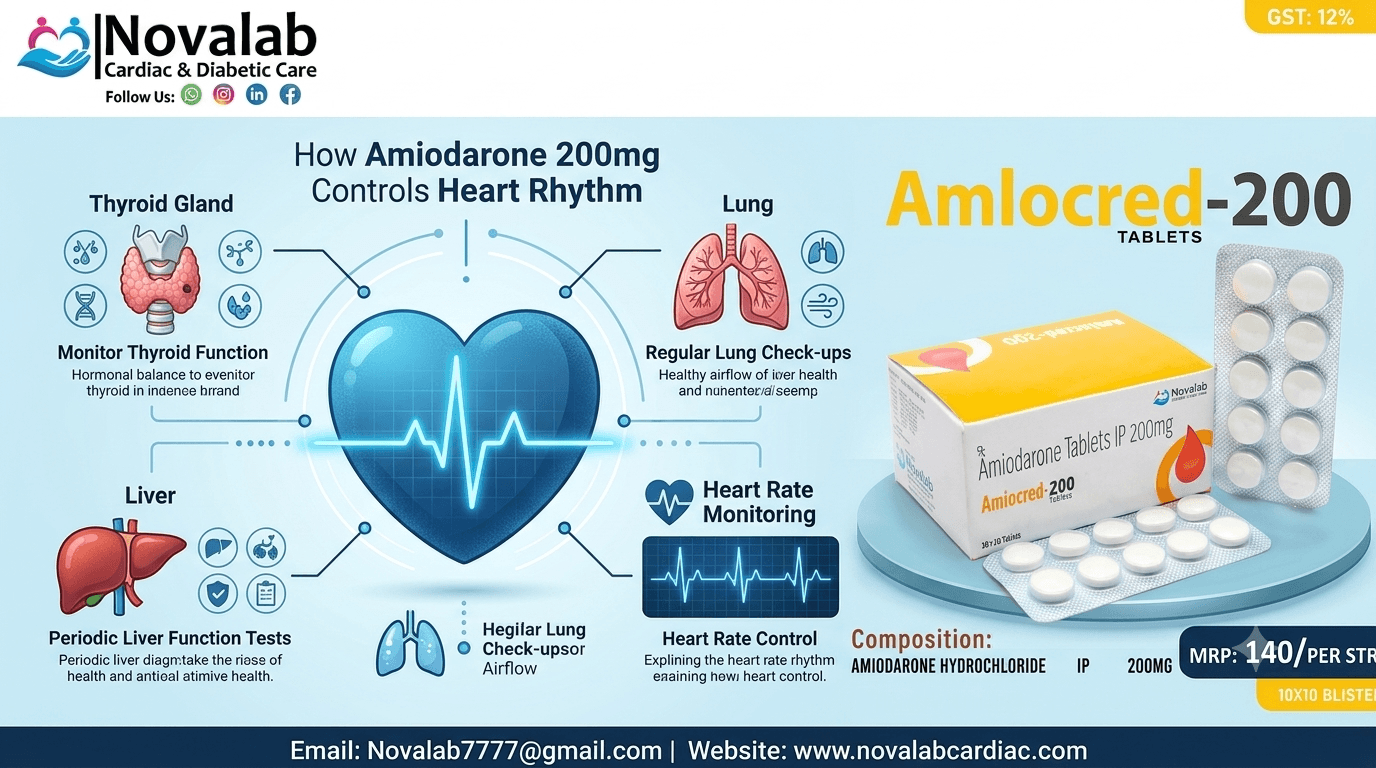
Novalab Cardiac & Diabetic Care has shared product packaging for its 200mg amiodarone hydrochloride tablets under the Amicored-200 product name shown on the pack.
The supplied product image displays the following details:
| Product detail | Information |
|---|---|
| Product name | Amicored-200 (as printed on the carton) |
| Active ingredient | Amiodarone Hydrochloride IP |
| Strength | 200mg |
| Dosage form | Tablets |
| Pack information | 10 × 10 blister |
| Displayed MRP | ₹140 per strip |
For current product availability, approved indications, packaging, and commercial enquiries, contact Novalab directly. Product details and prices should be confirmed against the latest approved packaging and product information.
Visit the Novalab Cardiac website to learn about its cardiac and diabetic pharmaceutical range.
Why Is Accurate Information About Amiodarone 200mg Important?
Amiodarone is a prescription antiarrhythmic medicine that requires careful selection, dosing, and follow-up. Patients should understand its intended use, possible side effects, and monitoring requirements before beginning treatment.
For healthcare professionals and pharmaceutical distributors, accurate product information also supports responsible communication about the medicine’s strength, formulation, and approved use.
Novalab Cardiac & Diabetic Care is based in Panchkula, Haryana, and works in the cardiac and diabetic pharmaceutical segment. For product-related enquiries, visit the company’s contact page.
Frequently Asked Questions About Amiodarone 200mg Tablets
1. Is Amiodarone 200mg used for high blood pressure?
No. Amiodarone is an antiarrhythmic medicine used for selected abnormal heart rhythms. It is not a routine treatment for high blood pressure.
2. Can Amiodarone 200mg be taken for a long time?
Some patients require long-term treatment. The doctor must review the benefits, risks, and monitoring results regularly.
3. Can Amiodarone affect thyroid function?
Yes. Amiodarone can cause an underactive or overactive thyroid. Doctors monitor thyroid function during treatment.
4. Should Amiodarone be stopped suddenly?
Patients should not stop amiodarone without medical advice. Its effects can persist for weeks or months after discontinuation.
5. Does Amiodarone interact with other medicines?
Yes. It can interact with several medicines, including warfarin, digoxin, and certain drugs that affect heart rhythm. Always share your complete medication list with your doctor.

