Top 10 Cardiac Diabetic PCD Pharma Franchise Companies in India 2026-27

Cardiac PCD Pharma Company in Chandigarh
September 22, 2026
Cardiac Diabetic PCD Pharma Franchise in Himachal Pradesh: Building a Focused Chronic Care Business
October 6, 2026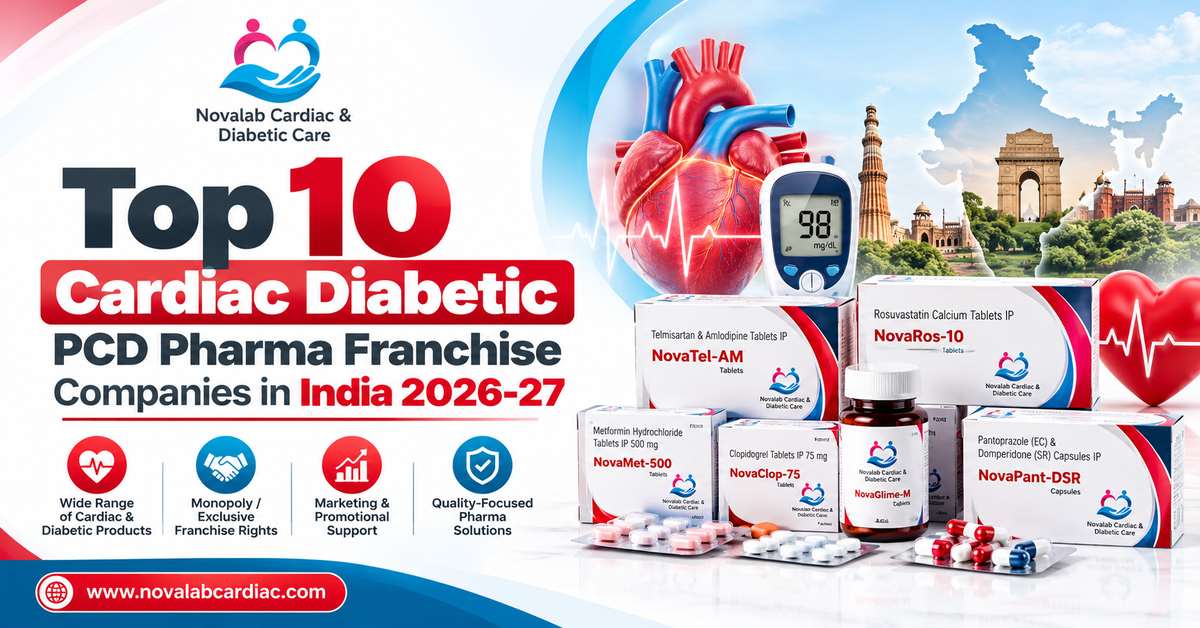
Ask any chemist which medicines his regular customers never skip, and BP tablets and sugar tablets will come up almost straight away. People buy them every month, often for years, sometimes from the same shop for a decade. That kind of steady demand is why a cardiac diabetic PCD pharma franchise has become one of the more popular choices for medical reps and distributors who want to start their own business.
Choosing a company is where most people get stuck. There are hundreds of them, and their websites all seem to say the same things. So we’ve put together ten companies that work in this segment, with what each one says about itself. This isn’t an official ranking. It’s a shortlist to begin with, and every company on it should be contacted directly before you decide anything.
What is a cardiac diabetic PCD pharma franchise?
PCD stands for Propaganda Cum Distribution. Under this model, a pharma company lets you sell its heart and diabetes medicines in a fixed area. They make the products. You find the doctors and chemists who will use them.
It covers two kinds of medicines that usually travel together. Heart medicines handle things like blood pressure, cholesterol, and blood thinning, and diabetes medicines keep sugar in control. Plenty of patients need both, and quite often it’s the same doctor writing both prescriptions, which is why companies tend to bundle them.
How Does the Cardio Diabetic PCD Franchise Business Model Work?
The company looks after manufacturing, quality and dispatch. The partner looks after the market.
A typical start goes like this. A partner chooses a few products from the company’s list, places a small first order, and begins visiting physicians, cardiologists, and diabetologists in the area. The chemists near those clinics matter just as much, because that’s where the prescriptions get filled. Once doctors start writing the brand, chemists reorder, the partner reorders from the company, and slowly the business builds up. Most companies send visual aids or product literature to help with doctor visits, though how much you get depends entirely on the company.
Why is the Cardiac & Diabetic Pharma Segment Important in India?
Growing Requirement for Long-Term Cardiac Care:
High BP and heart problems aren’t just a big-city issue anymore. You’ll find them in small towns and villages too. And unlike an antibiotic that’s done in five days, a BP or cholesterol tablet usually stays in a patient’s life for years. For a franchise partner, one prescription can mean a sale every single month.
Increasing Demand for Diabetes Management Products:
India has one of the biggest diabetic populations in the world, and people are getting diagnosed younger than before. Doctors have also moved beyond the old standbys. Metformin and glimepiride are still everywhere, but newer medicines like gliptins and SGLT2 inhibitors are now written just as often, so the diabetic range keeps getting wider.
Importance of Continuous Product Availability:
Here’s the catch with long-term medicines. They only keep selling if they’re always available. If a patient comes for his monthly BP tablets and the chemist doesn’t have your brand, he’ll get another one. Do that twice and the doctor might stop writing yours altogether.
Top 10 Cardiac Diabetic PCD Pharma Franchise Companies in India
Below are ten cardiac diabetic PCD pharma franchise companies in India. The numbers aren’t a quality ranking, and each description is based on what the company itself states. Please confirm the range, documents, and territory with any company before signing.
1. Novalab Cardiac:
Novalab Cardiac does nothing except cardiac and diabetic medicines, which makes it one of the more focused names on this list. It’s ISO 9001:2015 certified and follows GMP-WHO manufacturing standards, according to the company. Its range covers antihypertensives, antiarrhythmics, anti-diabetic medicines, cholesterol products, and antiplatelets, so a partner can offer most of what a physician or cardiologist writes in a day. Monopoly rights are on offer wherever territory is still available.
2. Dazzle Healthcare:
Dazzle Healthcare isn’t a cardiac-only company. Its cardiac, BP and diabetic products are part of a much bigger catalogue, which can suit partners who’d rather sell a mix of segments than focus on one. The company mentions ISO, GMP and WHO certifications and offers monopoly to its partners, so it’s a reasonable option for someone who wants heart and diabetes products alongside a general range.
3. Biorise (Division of Biofield):
Biorise comes from Biofield Pharma, which says it holds ISO 9001:2015 certification. Instead of mixing cardiac products into a general list, the company runs Biorise as a separate division with its own specialized cardiac range. Partners also get promotional help from the company, which is useful for anyone new to doctor visits in this segment.
4. Cardiancare:
The name gives it away. Cardiancare works mainly in cardiac and diabetic products and says its portfolio in this area is a large one. There’s no published product count, though, so the best way to judge the range is to ask for the latest list and compare it with what doctors in your area actually prescribe.
5. Cubic Lifesciences:
Cubic Lifesciences sells across many categories. On the cardiac side you’ll see amlodipine and atenolol combinations, and the rest of the range covers tablets, syrups and paediatric products. It’s more of a general company with cardiac and diabetic products included than a specialist.
6. Greystar Pharma:
Greystar Pharma runs a PCD franchise business across several therapy areas, with cardiac and diabetic products included. It hasn’t published certification details or product numbers for this segment, so those are worth asking about before any decision. For partners who want a broad range rather than a specialist one, it’s a company to look at.
7. Rezicure Pharmaceuticals:
Rezicure has been around since 2011. The company says its manufacturing facilities are GMP, GLP, and ISO certified. Voglibose is part of its range, and so are combinations based on amlodipine and telmisartan.
8. Coniak Lifesciences:
Coniak Lifesciences started in 2018. Its range is a broad one, with tablets, injectables, and paediatric products, and cardiac and diabetic medicines are part of the mix.
9. Ambit Bio-Medix:
Ambit Bio-Medix keeps its heart and diabetes products in a separate Cardio Diabetic division, which has more than 100 products. That’s one of the clearer numbers on this list, since many companies don’t share a count at all. The company holds ISO 9001 and WHO-GMP certifications.
10. Fortune Labs:
Fortune Labs lists cardiac and diabetic products among its main areas, as part of a wider range. Its monopoly terms and full product list aren’t clearly stated, so these are best checked with the company itself before going ahead.
Comparison of Top Cardiac Diabetic PCD Pharma Franchise Companies
| Company | Cardiac Range | Diabetic Range | Monopoly Opportunity | PCD Franchise |
|---|---|---|---|---|
| Novalab Cardiac | Dedicated | Dedicated | Yes | Yes |
| Dazzle Healthcare | Multi-Range | Multi-Range | Yes | Yes |
| Biorise | Dedicated | Dedicated | Yes | Yes |
| Cardiancare | Dedicated | Dedicated | Yes | Yes |
| Cubic Lifesciences | Multi-Range | Multi-Range | Yes | Yes |
| Greystar Pharma | Multi-Range | Multi-Range | Yes | Yes |
| Rezicure Pharmaceuticals | Dedicated | Dedicated | Yes | Yes |
| Coniak Lifesciences | Multi-Range | Multi-Range | Yes | Yes |
| Ambit Bio-Medix | Dedicated | Dedicated | Yes | Yes |
| Fortune Labs | Multi-Range | Multi-Range | Verify Directly | Yes |
“Dedicated” means the company keeps a separate cardiac and diabetic range or division. “Multi-range” means these products are part of a bigger general catalogue.
Cardiac & Diabetic Product Categories to Consider for PCD Franchise
- Antihypertensive Products:
BP medicines are usually the biggest part of a cardiac range. Telmisartan and amlodipine are written everywhere, often together in one tablet, and olmesartan and bisoprolol are common too. There’s a lot of competition, but there’s a lot of demand as well.
- Anti-Diabetic Products:
Metformin is where most diabetes treatment begins. Older medicines like glimepiride, gliclazide, and pioglitazone are still very much in use. Gliptins such as linagliptin and teneligliptin have become hugely popular in the last few years.
- Antiplatelet & Anticoagulant Products:
After a heart attack or a stent, most patients go home on clopidogrel or an aspirin-based product. Blood thinners like dabigatran are mostly started by specialists, so they sell better in towns with a cardiologist.
- Cholesterol Management Products:
Atorvastatin and rosuvastatin do most of the work here. Bempedoic acid is a newer option for patients who can’t take statins or need something extra. Once a patient starts on a cholesterol medicine, they tend to stay on it.
- Cardiovascular Care Products:
Medicines for irregular heartbeat, angina and heart failure fall here, like amiodarone, carvedilol, and ranolazine. They don’t sell in big numbers, but a cardiologist will notice if they’re missing from your range.
- Blood Sugar Management Formulations:
Empagliflozin and dapagliflozin, the SGLT2 group, belong here along with voglibose. SGLT2 medicines are interesting from a business point of view because diabetologists and cardiologists both write them.
- Combination Cardiac-Diabetic Formulations:
Two-in-one tablets are very common in this segment, metformin with a gliptin or telmisartan with amlodipine, for example. The combinations your local doctors already write will always sell better than whatever happens to be in a catalogue.
Popular Cardiac & Diabetic Products Offered by Novalab
Here are some products from Novalab Cardiac’s published range:
| Brand Name | Composition | Packing |
|---|---|---|
| AMIOCRED-100 | Amiodarone 100 mg | 10×10 Blister |
| BENKOK-4 | Benidipine 4 mg | 10×10 Alu-Alu |
| BISOCRED-2.5 | Bisoprolol Fumarate 2.5 mg | 10×15 Blister |
| BEMIOVA-180 | Bempedoic Acid 180 mg | 10×7 Alu-Alu |
| CARVECRED-6.25 | Carvedilol 6.25 mg | 10×15 Blister |
| CLOPIDEYS-A 75 | Clopidogrel 75 mg | 10×10 Alu-Alu |
There’s more beyond this table. The range also has empagliflozin and linagliptin based tablets, gliclazide 60 mg, pioglitazone 30 mg, olmesartan based tablets and dabigatran 150 mg capsules. The Novalab team can send the full, current list with brand names and packing.
How to Choose a Cardiac Diabetic PCD Pharma Franchise Company?
Every company will tell you it’s the best one. These are the things that actually separate them.
1. Check the Cardiac & Diabetic Product Range:
It’s much easier to sell a proper cardiac and diabetic range than five cardiac products tucked inside a general list. Specialists can tell the difference in about a minute. Your range should also line up with what doctors in your area are already prescribing.
2. Verify Manufacturing & Quality Documentation:
A certificate mentioned on a website is one thing. A copy with a valid date is another. It’s perfectly normal to ask for ISO or GMP certificates, sample labels and where the products are made.
3. Understand Monopoly Territory Rights:
“Your area” can mean a town, a district or a much bigger region, and those are completely different deals. A partner who agrees to vague terms may later find another partner working close by. The exact boundary should always be written into the agreement.
4. Compare Product Pricing and Commercial Terms:
Two rate lists can look almost the same until you add GST, freight and the minimum order. Work out what each product really costs once it reaches you, and compare that.
5. Check Product Availability & Supply Consistency:
This one gets overlooked a lot. In a business built on monthly refills, a company that keeps running out of its fast movers will cost you prescriptions, no matter how good its rates are.
6. Evaluate Promotional & Marketing Support:
Visual aids, literature and samples make doctor visits easier, especially for someone new to this segment. Some companies are generous with these and some give very little. It helps to know exactly what you’ll receive, and how often it gets updated, before signing.
7. Review Franchise Agreement Terms:
Read the agreement properly before signing. Territory, products, targets, how long it runs and how either side can end it should all be in there. Promises made over the phone are hard to hold anyone to later.
Monopoly-Based Cardio Diabetic PCD Pharma Franchise
What are Monopoly Rights?
With a Monopoly Cardio Diabetic PCD Pharma Franchise, the company agrees not to give the same products to another partner in your territory. That protects you from competition inside the company’s own network. Other brands can still sell in your area, of course.
Why Territory Availability Matters
Monopoly usually goes on a first-come basis, and once an area is given away it’s normally closed for those products. The best territory to start with is one you can cover properly every week, with enough doctors and chemists to keep sales steady.
Points to Check Before Taking Monopoly Rights
Get clarity on the exact area, the products covered, whether new launches come to you, how long the rights last and whether there’s a monthly purchase target. If there’s a target, think about a slow month. A number that only works when sales are good can become a problem quickly.
Documents Required for Cardiac Diabetic PCD Pharma Franchise
Since cardiac and diabetic medicines need a prescription, you’ll need a wholesale drug licence, usually on Forms 20B and 21B, from your state’s drug licensing authority. The licence also requires proper storage space and a qualified or experienced person.
Companies will generally ask for your drug licence, GST registration, PAN, Aadhaar or another ID, address proof for your premises, bank details and business registration papers. Rules can vary slightly between states, so the local licensing office can confirm what’s needed where you are.
Investment & Working Capital Planning for Cardio Diabetic PCD Franchise
You won’t find one investment figure that fits everyone. The cost of a Cardio Diabetic PCD Franchise depends on how many products you pick, how much of each, the company’s MOQ, freight, promotion and the credit you give chemists.
That last part catches many new partners off guard. Chemists usually take some credit, but the company still has to be paid for your next order. Starting with a smaller range and keeping some money aside for reorders makes the first few months far less stressful.
Why Consider Novalab Cardiac & Diabetic Care for PCD Franchise?
1. Specialized Cardiac & Diabetic Portfolio:
Novalab doesn’t sell anything outside cardiac and diabetic care. If this is the segment you want to build in, that focus means the range is built around what heart and diabetes doctors actually write.
2. Wide Range of Cardiac & Anti-Diabetic Formulations:
From antihypertensives and statins to antiplatelets, anticoagulants and anti-diabetic tablets, the portfolio covers most of what a partner needs. It also includes newer molecules like bempedoic acid, empagliflozin and linagliptin.
3. Monopoly-Based Business Opportunities:
Monopoly is offered wherever territory is still open. That means a partner can build a market without another Novalab partner selling the same products in the same area. The exact area and terms are settled before the agreement is signed, so there’s no confusion later.
4. Marketing & Franchise Support:
Partners get promotional and marketing support for their area, which helps a lot in the first few months of doctor visits. The company also helps on the distribution side, so orders and dispatch don’t become a headache while the business is still small.
5. Product Packaging & Supply Support:
Products are packed in blister and alu-alu packs, which keep tablets safe from moisture and damage on the way. Novalab is ISO 9001:2015 certified and follows GMP-WHO manufacturing standards, and it puts real effort into keeping regular supply going, since that’s what this segment depends on.
Future Scope of Cardiac Diabetic PCD Pharma Franchise Business in India
More Indians are living with BP, heart disease and diabetes every year, and most of them need medicine daily. At the same time, more physicians and diabetologists are opening clinics in smaller towns, so patients who once had to travel to a city can now get treated close to home. New molecules keep arriving too.
All of this points to demand that isn’t going anywhere. The partners who do well over the years are usually the ones who never let stock run out, keep visiting their doctors and build their range around what their own area prescribes.
Conclusion:
In the end, picking a cardiac diabetic franchise company comes down to a handful of things that are easy to check. Does the range suit your doctors? Do the documents hold up? Are the monopoly terms clear, and does the supply stay steady? The ten companies above all work in this space in their own way, some with a dedicated division and some as part of a wider range.
If you’d like a company that focuses only on heart and diabetes care, Novalab Cardiac & Diabetic Care is worth talking to. The team can share the current product list and tell you whether your territory is still open.
Frequently Asked Questions:
Q.1 Which factors should be checked while choosing a Cardiac Diabetic PCD Pharma Franchise Company?
Ans. Mainly the product range, documents, monopoly terms, pricing, supply record, promotional support and the agreement. Over time, range and supply tend to matter the most.
Q.2 What is a Cardio Diabetic PCD Pharma Franchise?
Ans. It’s when a pharma company gives you the right to sell its heart and diabetes medicines in a fixed area. The company makes and supplies them, and you build the market.
Q.3 What products are included in a Cardiac Diabetic PCD Franchise?
Ans. BP medicines, statins, antiplatelets and blood thinners on the cardiac side, plus anti-diabetic tablets like metformin, gliptins and SGLT2 medicines. Combinations of these are common too.
Q.4 What are monopoly rights in a Cardiac Diabetic Pharma Franchise?
Ans. The company promises not to appoint anyone else for the same products in your area. Other brands are still free to sell there.
Q.5 What documents are generally required for a PCD Pharma Franchise?
Ans. A wholesale drug licence and GST registration, along with PAN, ID and address proof, bank details and business papers. Requirements can differ a little between states.
Q.6 How should I compare Cardiac Diabetic PCD companies?
Ans. Put them side by side on range, certificates, the real cost per product, monopoly terms, supply and support. Comparing rate lists alone usually gives the wrong answer.
Q.7 Is product range important when selecting a Cardiac Diabetic franchise company?
Ans. Very. If the range matches what local doctors prescribe, getting prescriptions and repeat orders becomes much easier.
Q.8 How should franchise territory be evaluated?
Ans. Look at how many doctors and chemists are in the area, how many brands are already there and whether you can cover it regularly.

