Cardiac Diabetic PCD Pharma Franchise in Himachal Pradesh: Building a Focused Chronic Care Business

Top 10 Cardiac Diabetic PCD Pharma Franchise Companies in India 2026-27
October 1, 2026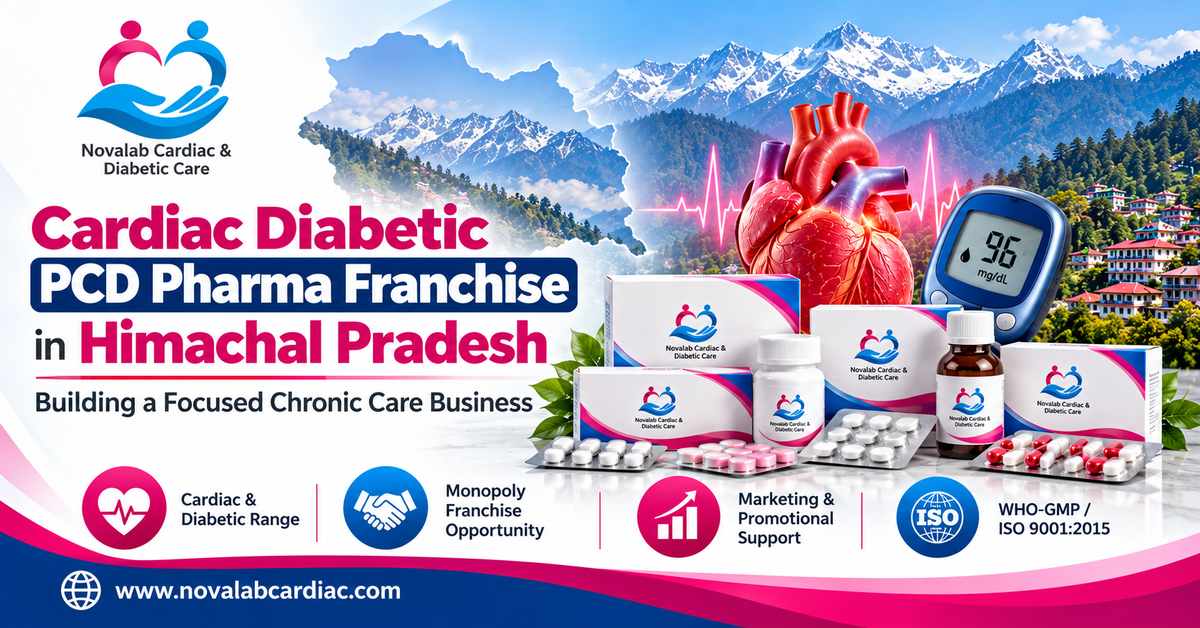
Cardiac and diabetic medicines don’t sell like cough syrups. Nobody stocks up on them for winter and forgets them by April. Someone on BP tablets or metformin usually takes them every single day, often for years, and that kind of steady, boring demand is exactly why so many distributors and medical reps end up looking at a Cardiac Diabetic PCD Pharma Franchise in Himachal Pradesh.
It’s not the easiest segment to walk into, mind you. Your doctors here are mostly physicians, cardiologists and diabetologists. They know their molecules, they have brands they already trust, and a new face with a visual aid isn’t going to change that in one visit. Which product list you carry, which company is behind it and how you plan your area all count for a lot more than in a general range.
What Is a Cardiac Diabetic PCD Pharma Franchise?
Put simply, you get a company’s cardiac and anti-diabetic range and the rights to sell it in a fixed area. You do the groundwork there with doctors, chemists, hospitals and distributors, and the company handles making, packing and sending the stock.
What else you get varies quite a bit. Product literature, visual aids, and some promotional inputs help with orders, maybe territory rights. Some companies give all of it; some give a rate list and a phone number. Ask, and get the answer into the agreement.
What people like most about working only these two segments is that you actually get good at them. After a few months you know which strengths the local physician prefers, which gliptin he reaches for first, which combinations are moving and which aren’t. Doctors pick up on that.
Why Consider the Cardiac and Diabetic Segment in Himachal Pradesh?
Both are long-term conditions. Once a patient is settled on your BP tablet or your metformin combination, that prescription comes back every month, which is a very different life from selling seasonal stuff that moves for three months and then gathers dust.
Himachal has its own quirks, though. The bigger centres are Shimla, Kangra, Mandi, Solan and Hamirpur. There’s IGMC in Shimla, the medical college at Tanda, and AIIMS at Bilaspur. Beyond that, a lot of towns are so small that one physician and a couple of chemists make up the whole market. A distance that looks like nothing on Google Maps can easily eat half a day on the road, and up in the higher districts, snow in winter can hold a parcel for days.
So don’t plan for “Himachal”. Plan for the district, and for the towns inside it you can actually reach.
Major Cardiac Product Categories to Understand
If you’re about to meet a cardiac diabetic PCD pharma company in Himachal Pradesh, it helps to know roughly how each side of the range is laid out. Cardiac first.
1. Antihypertensive Products:
BP medicines. Telmisartan, amlodipine, beta blockers and a long list of combinations. Usually the biggest chunk of any cardiac range, and the place where you’ll face the most competition.
2. Lipid Management Products:
Statins mostly, atorvastatin and rosuvastatin, with newer molecules like bempedoic acid coming in. Patients stay on these for a long time, so once a doctor starts writing yours, it tends to keep moving.
3. Antiplatelet Products:
Clopidogrel and aspirin-based products, alone or combined. Cardiologists write them a lot, especially after a cardiac event or a stent.
4. Antianginal Products:
For angina, the chest pain that comes when the heart isn’t getting enough blood. Ranolazine is one. These don’t sell in the same numbers as BP or cholesterol medicines, but a cardiac range without them looks incomplete.
5. Heart Failure-Related Formulations:
Mostly written by specialists, so expect them to do better in towns that have a cardiologist than in places with only a general physician.
6. Cardiac Combination Products:
Fixed-dose combinations are everywhere in cardiac prescriptions. Pick the ones your doctors actually write. Forty combinations in a catalogue means nothing if your area uses six.
Major Diabetic Product Categories to Understand
The diabetic side is where a lot of the daily volume comes from, because diabetes is so common and almost every general physician treats it.
1. Metformin-Based Products:
Metformin is still where most type 2 diabetes treatment starts. Plain tablets, sustained-release versions and a huge number of combinations built around it. Expect heavy competition, but steady movement.
2. Sulfonylureas:
Glimepiride and gliclazide are the familiar names. Older molecules, cheaper, and still written a lot, often together with metformin in a single tablet.
3. DPP-4 Inhibitors (Gliptins):
Sitagliptin, vildagliptin and teneligliptin. Teneligliptin in particular is written very widely in India, mostly because it’s affordable. Most gliptins also come in metformin combinations.
4. SGLT2 Inhibitors:
Dapagliflozin and empagliflozin. Newer than the others, and cardiologists write them too, since they’re also used in heart failure care. This is one category where the cardiac and diabetic sides really meet.
5. Diabetic Combination Products:
Two-drug and three-drug combinations, like metformin with glimepiride or metformin with a gliptin. Same rule as on the cardiac side: carry what your doctors write, not everything on the list.
Why Cardiac and Diabetic Products Work Well Together
A lot of diabetic patients also have high BP or high cholesterol, and in a small Himachal town, one physician usually manages all of it. Companies know this, which is why the two ranges so often sit together.
For you, it means one visit can cover BP, cholesterol, antiplatelets and diabetes. Handy. The risk is that a bigger range tempts you into a bigger first order, so pick from both lists based on what your area actually needs.
How to Research the Himachal Pradesh Market Before You Start
Most people choose products and then go looking for a market. Do it the other way round.
Give it two weeks on the ground. Go to the main chemists and distributors, find out which hospitals and clinics see heart patients, and look for diabetes clinics and physicians with a big diabetic OPD. Write down which brands and compositions are already sitting on the shelves and roughly what they cost. Ask distributors how often they supply each town, because the answer for a district headquarters and for a small town up the hill can be very different.
Spotting popular medicines is easy. Finding a gap you can realistically fill is the useful part.
Select Products According to Movement, Not Catalogue Size
More products don’t automatically mean more business. Quite often they just mean more boxes in your godown.
Start with something manageable. Say a few antihypertensives, a couple of statins and an antiplatelet on the cardiac side, plus a metformin combination and a gliptin your doctors already write. Give it a few months, see which ones get reordered, and only then add more. That way your money sits in products that sell, not in stock counting down to expiry.
Cardiac and Diabetic Product Range Available with Novalab
Our cardiac and diabetic division covers antihypertensives, antiarrhythmics, antiplatelet and anticoagulant products, oral anti-diabetic medicines and other cardiovascular formulations. A few examples from the current cardiac list:
| Brand Name | Composition | Packing |
|---|---|---|
| AMIOCRED-100 | Amiodarone 100 mg | 10×10 Blister |
| BENKOK-4 | Benidipine 4 mg | 10×10 Alu-Alu |
| BISOCRED-2.5 | Bisoprolol Fumarate 2.5 mg | 10×15 Blister |
| BEMIOVA-180 | Bempedoic Acid 180 mg | 10×7 Alu-Alu |
| CARVECRED-6.25 | Carvedilol 6.25 mg | 10×15 Blister |
| CLOPIDEYS-75 | Clopidogrel 75 mg | 10×10 Alu-Alu |
| CONISTAT-5 | Rosuvastatin 5 mg | 10×10 Alu-Alu |
| CONIVAS-10 | Atorvastatin 10 mg | 10×10 Alu-Alu |
| RANODAZ-500 | Ranolazine 500 mg SR | 10×10 Blister |
| TELITOSS-20 | Telmisartan 20 mg | 10×10 Alu-Alu |
What to Check When Choosing a Cardiac Diabetic PCD Company in Himachal Pradesh
Everyone compares rate lists. Fewer people check the rest, and the rest is where problems come from.
Product Depth:
Is it a proper cardiac and diabetic range, or a few BP tablets and a metformin tucked inside a general list? A cardiologist or diabetologist will spot the difference in about a minute.
Current Product Availability:
Your doctor writes a molecule; the chemist calls for it, and it’s out of stock. That’s how you lose a prescription. With diabetic patients, who come back for refills every month, it hurts even more. Ask what’s available today and how fast repeat orders go out.
Manufacturing and Quality Documentation:
If a company talks about ISO, GMP or WHO-GMP, ask for current certificates that cover the products you’ll sell. We describe ourselves as ISO 9001:2015 certified, with production following WHO-GMP guidelines, and we’d honestly prefer you check our documents before signing rather than after.
Packaging and Shelf Life:
Check the packing and how much shelf life is left on what you’ll actually receive. Short-dated stock is a headache anywhere, and worse in a small hill town where it moves slowly.
Dispatch System:
This one matters more in Himachal than almost anywhere else. How are orders processed, how many days to your district, and what’s the plan when roads close in January?
Understanding Monopoly-Based Franchise Rights in Himachal Pradesh
Monopoly means the company gives you marketing and distribution rights for a set area and doesn’t appoint anyone else there for the same products.
We offer monopoly-based PCD rights for dedicated locations, and Himachal Pradesh is one of the regions where we’re looking for partners.
Whoever you sign with, pin a few things down first. The exact boundary, because “Kangra” could mean one town or the whole district. Which products are covered, and whether that means cardiac, diabetic or both. Any minimum order or sales condition. Whether someone already holds rights nearby. How long it lasts, and how renewal and termination work. All of that goes in writing. A promise made on a call is very hard to hold anyone to a year later.
How Much Investment is Required?
There’s no one number. If a company quotes you a figure before asking how many products you want or which district you’ll cover, be a little suspicious.
It comes down to the number of products, units of each, product prices, how big your territory is, freight, promotion, and how much credit you end up giving chemists and distributors. Taking both cardiac and diabetic ranges from day one will naturally push the opening amount up. Our own franchise information says the same thing: investment depends on location and product selection.
Small and well chosen beats big and hopeful for a first order, pretty much every time.
Documents and Business Requirements in Himachal Pradesh
Pharma distribution is regulated, so get the paperwork done before the first order. Usually that’s a drug licence and GST registration, plus whatever else your business structure needs. Our franchise eligibility asks for a drug licence and GST registration as well.
Rules change from time to time, so check the current requirements with the licensing authority or a consultant who handles this regularly.
Managing Inventory in a Cardiac and Diabetic Franchise
Split your stock into three groups, and it gets much easier. Fast movers get a fixed reorder level so they never run out, and on the diabetic side, metformin combinations usually land here. Moderate movers you stock according to what’s actually selling. Slow movers you buy only when there’s a confirmed need.
Write down batch numbers, expiry dates and monthly sales. Boring, yes. But three or four months of that record will tell you exactly where your money should be going.
Building Repeat Business in Your Territory
In this segment, a doctor who trusts your brand writes it for the same patients month after month. One such doctor is worth more than ten new accounts that order once and never call back.
Keeping them is mostly about the basics. Stock that’s always there, orders that reach on time, visits that happen when you said they would, and no games with pricing. One chemist who orders every month will do more for you than five who tried you once.
About Novalab Cardiac & Diabetic Care
Novalab Cardiac & Diabetic Care is a specialised cardiac and diabetic division based in Panchkula, Haryana. We offer a wide range of cardiovascular and anti-diabetic formulations and work with PCD franchise partners across several Indian regions, Himachal Pradesh among them, with territory-based opportunities and promotional support.
Being in Panchkula also puts us close to the Himachal border, which helps when dispatching to districts like Solan and Sirmaur.
If you’re looking into a Cardiac Diabetic PCD Pharma Franchise in Himachal Pradesh, put us on your shortlist and compare us on range, territory availability, documents and commercial terms. The team can share the current list and tell you whether your area is still open.
Conclusion:
Cardiac and diabetic business in Himachal builds slowly, but it holds. Learn your district, carry what your doctors actually write, keep stock lean and make sure supply doesn’t break, January snow included.
And when you’re comparing any Cardiac Diabetic PCD Pharma Company in Himachal Pradesh, look past the rate list at the range, the stock position, the documents, the monopoly terms and how dependable the dispatch really is.
Frequently Asked Questions:
Q.1 How do I start a cardiac diabetic PCD pharma franchise in Himachal Pradesh?
Pick your district first and spend a couple of weeks meeting chemists, distributors and doctors there. Then shortlist two or three companies, get your drug licence and GST sorted, confirm territory terms in writing and start with a small order.
Q.2 How much investment does a cardiac diabetic PCD franchise need?
It depends on how many products you take from each range, your territory size, freight, promotion and the credit you give customers. Ask the company for a product-wise quotation to get a real figure.
Q.3 Which licences are required?
Generally a drug licence and GST registration. Check the current rules with the licensing authority before you start, since requirements can depend on how your business is set up.
Q.4 Is monopoly available for a cardiac diabetic franchise in Himachal Pradesh?
Yes, with Novalab it is, for dedicated locations. Make sure the agreement clearly states the area, whether it covers cardiac, diabetic or both ranges, any sales conditions and how long the rights last.
Q.5 Which products usually sell the most?
On the cardiac side, BP medicines, statins and antiplatelets usually move the most. On the diabetic side, it’s metformin combinations and gliptins. What actually sells in your district depends on the doctors there, so check during your market visits.
Q.6 Should I start with both cardiac and diabetic ranges, or just one?
If your budget allows, a few products from each works well, because the same physicians treat BP, cholesterol and diabetes. If money is tight, start with whichever side your field visits showed more demand for and add the other later.

